

The Life Zones and Their Trees of Summit County, Colorado

Updated: Apr 30
From shimmering aspen forests to wind-shaped alpine trees, Summit County’s mountain landscape is defined by elevation. As you climb from valley floors to rugged peaks, distinct life zones emerge, each with its own climate, soil conditions, and tree species.
For homeowners and property managers, understanding these life zones is essential for smart Summit County tree care, because tree health, growth patterns, and risks like pine beetle damage all depend on altitude and environment.
Whether you live in Breckenridge, Frisco, Dillon, Silverthorne, Keystone, or Copper Mountain, your trees are shaped by the elevation you live at and often by multiple overlapping zones.
Let’s explore the altitudinal life zones of Summit County and the remarkable trees that grow within them.
Montane Zone (Approximately 8,000–9,500 feet)
The Montane zone is where many Summit County neighborhoods and properties are located. This zone experiences slightly warmer temperatures, deeper soils, and longer growing seasons than higher elevations.
Common Trees of the Montane Zone
Quaking Aspen (Populus tremuloides)
Known as the iconic quivering trees of Colorado, aspen trees are easily recognized by their smooth white bark and leaves that shimmer in even the slightest breeze. Aspen forests are actually massive clonal root systems, meaning many groves are one interconnected organism. Aspens thrive after disturbance, including wildfire and clearing, making them common near developed areas.
Lodgepole Pine (Pinus contorta)
A tall, straight pine adapted to mountain conditions, lodgepole pines often dominate mid-elevation forests. They grow densely and can be vulnerable to pine beetle damage, which has reshaped many Summit County forests in recent decades.
Ponderosa Pine (Pinus ponderosa)
Found in warmer, sunnier slopes at lower elevations, ponderosa pines have thick bark and long needles in bundles of three. Their resistance to low intensity fire helps them survive in drier montane environments.

Tree care note:
Montane zone trees often face development stress, soil compaction, and irrigation issues. Proper trimming and monitoring by a local altitude arborist helps maintain long term health.
Subalpine Zone (Approximately 9,500–11,500 feet)
Most residential communities in Summit County sit within the Subalpine zone. Cooler temperatures, heavy snow loads, and shorter growing seasons define this environment. These forests are dense, dark green, and highly adapted to harsh winters.
Common Trees of the Subalpine Zone
Engelmann Spruce (Picea engelmannii)
A signature evergreen of high elevations, Engelmann spruce has short blue green needles and narrow cones. These trees can live hundreds of years and thrive in cool, moist environments.
Subalpine Fir (Abies lasiocarpa)
Often found alongside spruce, subalpine firs have soft, flat needles and spire shaped tops. They are highly tolerant of cold and heavy snow but can be susceptible to root disease and windthrow.
Limber Pine (Pinus flexilis)
Adaptable and resilient, limber pine grows in rocky soils and exposed slopes. Its flexible branches help it withstand heavy snow and strong winds.
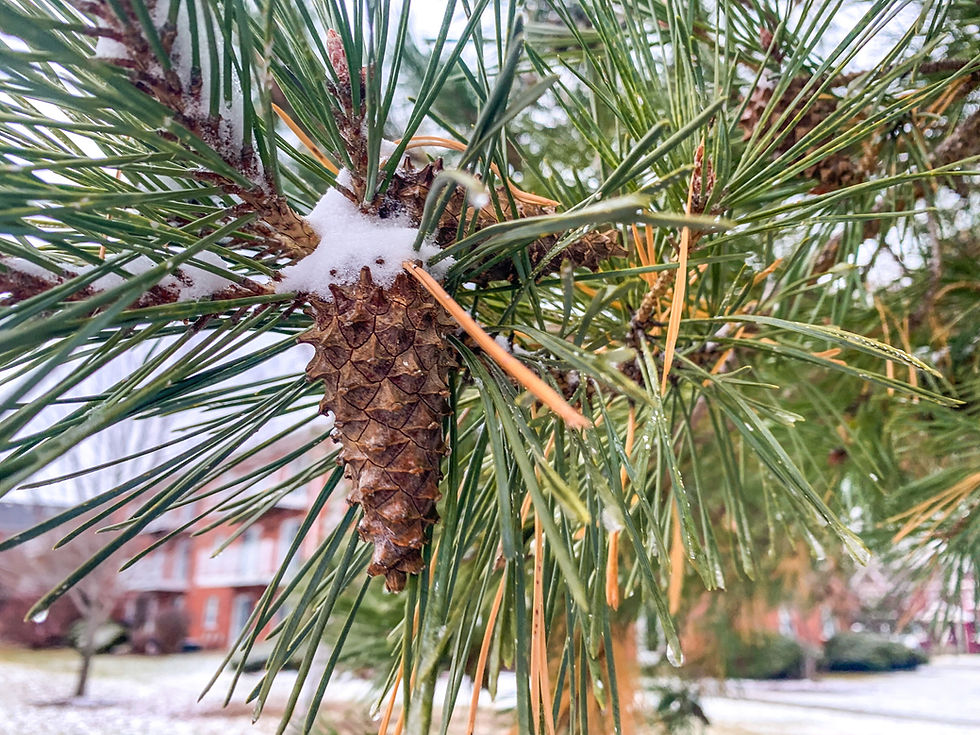
Tree care note:
This zone is where most Summit County tree care services are needed. Heavy snow, beetle activity, and dense growth create risk for falling limbs and overcrowding. Strategic thinning and health assessments help protect homes and surrounding forests.
Alpine Zone (Above 11,500 feet)
Above treeline, conditions become too harsh for most trees to survive. However, just below and near this boundary you will find stunted and wind shaped alpine trees adapted to extreme exposure.
Trees Near Treeline
Krummholz Spruce and Fir
These twisted, low growing forms of spruce and fir are shaped by wind, snow, and ice. They grow slowly and hug the ground for protection.
Bristlecone and High Elevation Limber Pine
Some limber and bristlecone pines survive near treeline, often appearing gnarled and sculptural. These trees can live for centuries despite severe alpine conditions.

Tree care note:
While few homes, huts, or structures sit directly in the Alpine zone, properties near treeline require specialized knowledge from an altitude arborist familiar with extreme weather impacts.
Where Life Zones Overlap
Summit County’s terrain rises dramatically over short distances. A single property can contain trees from multiple zones due to slope orientation, sun exposure, soil depth, and drainage patterns.
For example, a south facing lot in Breckenridge may support aspen trees and lodgepole pine typical of lower elevations, while a shaded section hosts spruce and fir from higher zones. This overlap is what makes local Summit County tree knowledge so important.
Understanding how zones intersect helps determine proper pruning, removal timing, and disease monitoring.
Forest Health and Pine Beetle Impact
Over the past two decades, pine beetle damage has significantly changed Summit County forests. Lodgepole pine stands were primarily affected, creating shifts toward younger aspen forests and mixed conifer regrowth.
Over the past two decades, pine beetle damage has significantly changed Summit County forests. Lodgepole pine stands were especially affected, creating shifts toward younger aspen forests and mixed conifer regrowth.
Healthy forest management today focuses on removing dead or hazardous trees, encouraging species diversity, monitoring for disease and stress, and protecting homes in wildfire prone areas.
Trees You’ll Find Across Summit County, Colorado
Many visitors and homeowners are curious about what types of trees grow in the mountains around Breckenridge, Frisco, Dillon, and Silverthorne. Because of the dramatic elevation changes across Summit County, the forests shift quickly as you move up the mountainsides.
At lower elevations around 8,000 to 9,000 feet, you’ll commonly see aspen trees, lodgepole pine, and occasional ponderosa pine. Aspen forests are especially common in sunny slopes and areas where forests have regenerated after disturbance.
As you move higher into the subalpine forests between about 9,500 and 11,500 feet, the dominant trees become Engelmann spruce, subalpine fir, and lodgepole pine. These evergreen forests create the dark green mountain landscapes visible around many ski areas and high mountain valleys.
Near treeline, the forests thin dramatically as conditions become colder, windier, and more exposed. Here you may find twisted alpine trees known as krummholz, along with hardy limber pines growing in rocky soils.
These natural elevation changes are one reason professional Summit County tree care requires local expertise. Trees that thrive in one elevation zone may struggle just a few hundred feet higher or lower on the mountain.
Learn More About Summit County Forests
For deeper insight into local ecology and life zones, visit the Summit County Naturalist Information page from Friends of the Dillon Ranger District.
You can also explore information from the U.S. Forest Service Rocky Mountain Region and the Colorado State Forest Service.
Frequently Asked Questions About Summit County Trees
Why do aspen trees grow in clusters?
Aspen forests spread through underground root systems. What appears to be many trees is often one living organism connected below ground.
What trees grow best in Summit County?
Spruce, fir, lodgepole pine, and aspen trees dominate depending on elevation and exposure.
How does altitude affect tree health?
Higher elevations mean shorter growing seasons, heavier snow, and increased stress. An experienced altitude arborist understands how to care for trees in these conditions.
Should I remove beetle damaged trees?
Dead or structurally compromised trees should be evaluated promptly to prevent hazards and encourage forest health.
Professional Summit County Tree Care
Understanding Summit County’s life zones helps protect the beauty and safety of your property. From aspen forests to high elevation spruce and fir, each tree requires care tailored to altitude and environment.
If your property needs expert evaluation, trimming, or removal, professional guidance makes all the difference. For more, click here.
Contact Layman Tree Service for expert Summit County tree analysis and care at
https://laymantreeservice.com/ or text/call 970-331-0790.


Comments